
Prescription Required
Written and fact-checked by MedVipp Rx Editorial Team from FDA labeling and clinical references. Last updated: . About our editorial process
Lyrica (Pregabalin)
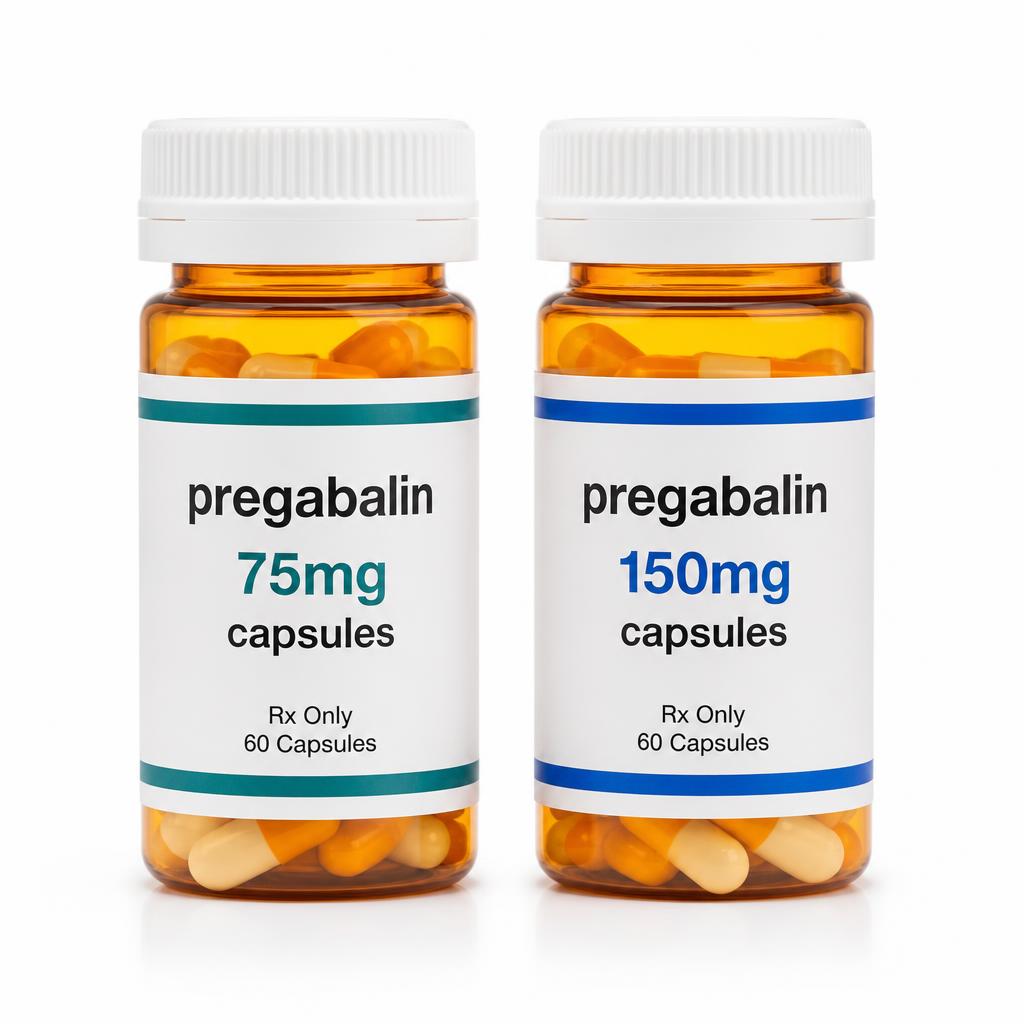
Lyrica is a prescription gabapentinoid that binds to alpha-2-delta calcium channel subunits to reduce neuropathic pain signals. The FDA approved pregabalin in 2004 for diabetic peripheral neuropathy, postherpetic neuralgia, fibromyalgia and partial-onset seizures.
- Dose: 50mg three times daily initially; target 300mg daily for neuropathy; max 600mg daily
- Status: Prescription required, DEA Schedule V controlled substance
- Primary warning: Stop Lyrica and seek emergency care for facial swelling or breathing difficulty
- Half-life: 6.3 hours, peak plasma within 1 hour, linear absorption
MedVipp Rx does not sell medication. We publish facts for patients and caregivers.
What Is Lyrica
Lyrica contains pregabalin, a gabapentinoid structurally related to gamma-aminobutyric acid. The FDA approved it in 2004. Pregabalin binds with high affinity to the alpha-2-delta-1 auxiliary subunit of voltage-gated calcium channels in the central nervous system. This reduces calcium influx at nerve terminals and decreases release of excitatory neurotransmitters including glutamate, norepinephrine and substance P.
Lyrica does not bind to opioid receptors, GABA-A receptors or sodium channels. It is not a benzodiazepine. The mechanism interrupts central sensitization, the process that causes neuropathic pain to persist after nerve injury heals. Lyrica is a Schedule V controlled substance under the Controlled Substances Act.
How Lyrica Works
Pregabalin produces analgesic and anticonvulsant effects through modulation of calcium channel function. By binding to alpha-2-delta subunits on presynaptic neurons, Lyrica reduces calcium-dependent release of several excitatory neurotransmitters. This dampens abnormal neuronal excitability without direct GABAergic activity.
Unlike gabapentin, pregabalin exhibits linear pharmacokinetics. Oral bioavailability exceeds 90 percent regardless of dose. Gabapentin shows saturable absorption with bioavailability dropping from 60 percent at 900mg daily to 33 percent at 3600mg daily. Lyrica reaches peak plasma concentration within 1 hour. Gabapentin requires approximately 3 hours. Lyrica has approximately 6-fold higher binding affinity for the alpha-2-delta-1 receptor than gabapentin.
Conditions Treated by Lyrica
Doctors prescribe Lyrica for four FDA-approved indications. Patients researching treatment options often have one of the following diagnoses:
- Diabetic peripheral neuropathy: nerve pain in hands and feet associated with diabetes. Starting dose is 50mg three times daily. Target is 100mg three times daily within 1 week based on response and tolerability.
- Postherpetic neuralgia: neuropathic pain following shingles. Starting dose is 75mg twice daily or 50mg three times daily. Target is 150 to 300mg daily divided into two or three doses. Maximum is 600mg daily.
- Fibromyalgia: widespread musculoskeletal pain. Starting dose is 75mg twice daily. Target is 150mg twice daily within 1 week. Maximum is 450mg daily.
- Partial-onset seizures: adjunctive therapy for adults and children aged 1 month and older. Dosing is individualized by weight and age. Maximum is 600mg daily for adults.
Lyrica is not approved for generalized anxiety disorder in the United States. It is not approved for migraine prevention. It is not indicated for chronic low back pain without neuropathic features. Compared to Neurontin (gabapentin), Lyrica offers more predictable absorption and higher receptor affinity. Cymbalta (duloxetine) provides an alternative mechanism for neuropathic pain through serotonin-norepinephrine reuptake inhibition.
Lyrica Dosage and Strengths
Available Forms
Lyrica is manufactured in capsules and oral solution. Your doctor selects the form based on diagnosis, age and kidney function.
- 25mg capsules: used for titration and patients with severe renal impairment.
- 50mg capsules: starting dose for titration in diabetic neuropathy and seizures.
- 75mg capsules: starting dose for postherpetic neuralgia and fibromyalgia.
- 100mg capsules: maintenance dose for diabetic neuropathy and seizures.
- 150mg capsules: standard maintenance dose for fibromyalgia and neuralgia.
- 200mg and 300mg capsules: maximum adult doses for severe neuropathic pain and seizures.
- Oral solution 20mg/mL: alternative for patients who cannot swallow capsules.
Standard Adult Dosing
For diabetic peripheral neuropathy, doctors start with 50mg three times daily. The dose increases to 100mg three times daily within 1 week based on response and tolerability. The maximum is 100mg three times daily (300mg total).
For postherpetic neuralgia, the starting dose is 75mg twice daily or 50mg three times daily. The dose may increase to 150mg twice daily or 100mg three times daily within 1 week. The maximum is 300mg twice daily or 200mg three times daily (600mg total).
For fibromyalgia, doctors start with 75mg twice daily. The dose increases to 150mg twice daily within 1 week based on response. The maximum is 225mg twice daily (450mg total).
For partial-onset seizures in adults, the starting dose is 75mg twice daily or 50mg three times daily. The dose may increase to 150mg twice daily based on response. The maximum is 600mg daily divided into two or three doses.
Renal Dose Adjustment
Pregabalin is eliminated renally unchanged. No hepatic metabolism occurs. Creatinine clearance determines dosing frequency. For CrCl 30 to 60 mL/min, reduce the daily dose by 50 percent and administer twice daily. For CrCl 15 to 30 mL/min, reduce by 75 percent and administer once daily. For CrCl less than 15 mL/min, reduce by 90 percent and administer once daily. Hemodialysis patients require supplemental doses after each session.
Missed Dose Instructions
Take the missed dose when you remember unless it is nearly time for the next scheduled dose. In that case, skip the missed dose and resume the normal schedule. Never double the dose. Doubling increases the risk of dizziness, somnolence and peripheral edema. If you miss multiple doses, contact your doctor. You may need to restart at a lower dose.
Tapering and Discontinuation
Taper gradually over a minimum of 1 week when discontinuing Lyrica. Abrupt stopping causes withdrawal symptoms including insomnia, nausea, headache, anxiety, sweating and diarrhea. In patients with epilepsy, abrupt withdrawal may increase seizure frequency. Your doctor will typically reduce the dose by 50 percent for 3 to 7 days before complete cessation. Never discontinue seizure therapy without neurologist supervision.
Side Effects
Common Side Effects
FDA clinical trials report the following adverse reactions. Most effects are mild and diminish after the first 2 to 4 weeks:
- Dizziness: 20 to 47 percent depending on dose and indication
- Somnolence: 13 to 36 percent, most pronounced during the first 2 weeks
- Peripheral edema: 6 to 16 percent, monitor ankle circumference
- Weight gain: 4 to 14 percent, more common in diabetic patients
- Dry mouth: 4 to 7 percent
- Blurred vision: 3 to 10 percent, typically transient
- Constipation: 4 to 6 percent
- Difficulty concentrating: dose-dependent, more common in older adults
Serious Side Effects
Contact emergency medical services immediately if you experience:
- Swelling of the face, mouth, lips, gums, tongue, throat or neck. This signals angioedema. Stop Lyrica immediately. Do not restart after angioedema.
- Difficulty breathing or swallowing. Airway compromise requires calling 911.
- Severe dizziness with fainting. Possible hypotension. Rise slowly from seated positions.
- Suicidal thoughts or behavior. Call 988 Suicide and Crisis Lifeline or 911.
- Severe muscle pain with fever. Possible rhabdomyolysis.
- Persistent vision changes. Ophthalmologic evaluation required.
Who Should Not Take Lyrica
Lyrica is contraindicated in patients with a history of angioedema with pregabalin or gabapentin. Do not use if you have hypersensitivity to pregabalin or any capsule component. Patients with severe renal impairment below 15 mL/min require significant dose reduction or alternative therapy.
Lyrica is not recommended for patients with uncontrolled heart failure. It may worsen peripheral edema. Those with a history of substance use disorder require careful monitoring. Although Schedule V indicates lower abuse potential than Schedule II through IV, dependence can develop with prolonged high-dose use.
Warnings and Precautions
Suicidal Thoughts and Behaviors
Lyrica carries an FDA boxed warning for suicidal thoughts and behaviors. Antiepileptic drugs increase this risk in approximately 1 in 500 patients. Risk is highest during the first month of therapy and after dose changes. Monitor mood daily. Contact your doctor immediately for worsening depression, agitation or suicidal ideation. Call 988 or 911 for active suicidal thoughts.
Angioedema
Angioedema is a rare but serious reaction. It causes swelling of the face, mouth, lips, gums, tongue, throat or neck. Discontinue Lyrica immediately and seek emergency care if symptoms develop. Difficulty breathing requires calling 911. Do not restart Lyrica after angioedema.
Opioid and CNS Depressant Interactions
Combining Lyrica with opioids or benzodiazepines increases the risk of severe respiratory depression, profound sedation, coma and death. The FDA issued a strengthened warning in December 2019. If concomitant use is absolutely necessary, use the lowest effective dose of each drug. Monitor closely for respiratory depression. Consider prescribing naloxone for emergency overdose reversal.
Alcohol
Avoid alcohol completely while taking Lyrica. Both alcohol and pregabalin are central nervous system depressants. Combined use significantly impairs motor coordination, judgment and respiratory drive. Do not drive until you know how Lyrica affects you. Rise slowly from seated positions to prevent falls.
Drug Interactions
Because pregabalin is eliminated renally unchanged, it does not undergo hepatic metabolism. No cytochrome P450 drug interactions exist. However, drugs that affect renal function can indirectly alter clearance.
- Opioids: increased risk of respiratory depression, sedation and coma. Use the lowest effective doses.
- Benzodiazepines: additive CNS depression. Monitor for excessive sedation.
- Alcohol: impairs coordination and respiratory drive. Avoid completely.
- Thiazolidinediones (pioglitazone, rosiglitazone): additive weight gain and peripheral edema. Monitor weight and ankle swelling.
- ACE inhibitors: may increase angioedema risk. Use with caution.
- Oral contraceptives: no significant interaction. No backup contraception needed.
Patients taking Trazodone or other CNS depressants should inform their doctor before starting Lyrica. Combined use increases sedation and fall risk.
Lyrica and Pregnancy
Lyrica crosses the placenta. Animal studies show fetal harm including skeletal abnormalities and low birth weight. Human data are limited. The FDA classifies pregabalin as Category C. Pregnant patients should use the lowest effective dose for the shortest possible time. Discuss risks with your OB-GYN before starting or continuing therapy.
Lyrica passes into breast milk. Infant sedation and poor feeding have been reported. Breastfeeding mothers should monitor infants for excessive sleepiness, poor weight gain and irritability. Consult a pediatrician before nursing while on Lyrica. Some doctors recommend discontinuing breastfeeding during treatment.
Overdose Information
Overdose symptoms include severe drowsiness, confusion, blurred vision, slurred speech and reduced consciousness. Very high doses may cause coma. There is no specific antidote for pregabalin overdose. Treatment involves supportive care including airway protection, cardiovascular monitoring and gradual dose reduction. Contact poison control at 1-800-222-1222. Seek emergency care for severe symptoms.
Lyrica vs Gabapentin
Lyrica and gabapentin are both gabapentinoids. Lyrica offers linear absorption with bioavailability exceeding 90 percent at any dose. Gabapentin exhibits saturable absorption where bioavailability drops from 60 percent at 900mg daily to 33 percent at 3600mg daily. Lyrica reaches peak concentration in 1 hour. Gabapentin requires approximately 3 hours.
Lyrica has approximately 6-fold higher binding affinity for the alpha-2-delta-1 receptor than gabapentin. This allows effective symptom control at lower doses. Lyrica is dosed twice or three times daily. Gabapentin typically requires three times daily dosing. Lyrica is a DEA Schedule V controlled substance. Gabapentin is not federally controlled, though several states classify it as Schedule V.
Storage and Handling
Store Lyrica capsules at room temperature between 20C and 25C. Keep the container tightly closed. Protect from moisture, heat and direct light. Do not store in the bathroom. Keep out of reach of children and pets. Store in a secure location to prevent theft or misuse. Dispose of expired or unused medication through a pharmacy take-back program. Do not flush Lyrica down the toilet unless specifically instructed.
Frequently Asked Questions
Is Lyrica available over the counter?
No. Lyrica is a DEA Schedule V controlled substance in the United States. It requires a valid prescription from a licensed physician. Any source dispensing pregabalin without a prescription operates illegally.
What is the difference between Lyrica and gabapentin?
Lyrica offers linear absorption with bioavailability exceeding 90 percent at any dose. Gabapentin shows saturable absorption where bioavailability drops at higher doses. Lyrica reaches peak concentration in 1 hour versus 3 hours for gabapentin. Lyrica has approximately 6-fold higher receptor binding affinity. Lyrica is a Schedule V controlled substance. Gabapentin is not federally controlled.
Can you drink alcohol while taking Lyrica?
No. Alcohol must be avoided completely. Both alcohol and pregabalin are central nervous system depressants. Combined use significantly impairs motor coordination, judgment and respiratory drive. Do not drive until you know how Lyrica affects you.
How do I stop taking Lyrica safely?
Taper gradually over a minimum of 1 week. Abrupt stopping causes withdrawal symptoms including insomnia, nausea, headache, anxiety and diarrhea. In patients with epilepsy, abrupt withdrawal may increase seizure frequency. Your doctor will typically reduce the dose by 50 percent for 3 to 7 days before complete cessation.
Can Lyrica be taken with opioids?
Combining Lyrica with opioids significantly increases the risk of severe respiratory depression, sedation and coma. The FDA issued a strengthened warning in December 2019. If concomitant use is absolutely necessary, use the lowest effective dose of each drug. Monitor closely for respiratory depression.
Is Lyrica a controlled substance?
Yes. Lyrica is classified as a DEA Schedule V controlled substance in the United States. This reflects accepted medical use and lower abuse potential than Schedule II through IV substances. Prescriptions can be refilled up to 5 times within 6 months.
Can Lyrica be taken long-term?
Yes, under medical supervision. Long-term use requires monitoring for weight gain, peripheral edema and mood changes. Some patients develop tolerance requiring dose adjustment. Periodic re-evaluation of kidney function is essential. Do not increase the dose without medical approval.
Does Lyrica cause weight gain?
Yes. Weight gain occurs in 4 to 14 percent of patients. It is more common in diabetic patients and with long-term use. Monitor weight monthly. Report sudden gains to your doctor. Dietary adjustments and exercise can help minimize gain.
Can I drive while taking Lyrica?
Do not drive until you know how Lyrica affects you. Pregabalin causes dizziness and somnolence in 20 to 47 percent of patients. These effects are most pronounced during the first 2 weeks of therapy. Avoid operating heavy machinery if you feel drowsy or uncoordinated.
What happens if you miss a dose of Lyrica?
Take the missed dose as soon as you remember unless it is nearly time for your next dose. In that case, skip the missed dose and resume your normal schedule. Never double the dose. Doubling increases the risk of dizziness and somnolence. If you miss multiple doses, contact your doctor.
Questions about Lyrica?
MedVipp Rx does not sell medication. We publish facts for patients and caregivers. Send corrections or questions to our editorial team.
Email the Editorial TeamSources and References
- U.S. Food and Drug Administration – LYRICA (pregabalin) Capsules and Oral Solution Prescribing Information, NDA 021446
- DailyMed – Pregabalin Drug Label, National Library of Medicine, Updated 2024
- PubMed – Pregabalin – StatPearls, NCBI Bookshelf
- PMC – Pharmacokinetic comparison of pregabalin and gabapentin, Journal of Clinical Pharmacology
- NIH – Pregabalin Oral Capsule, MedlinePlus
Editorial Standards
Our team reviews medical literature and FDA labeling to produce accurate patient guides. We do not sell medication. It is not reviewed by a licensed pharmacist or physician.
Medical Disclaimer
This page is for education only. It does not replace advice from your doctor. Never start, stop, or change a dose of pregabalin without medical guidance.
Emergency Notice
Call 911 for severe allergic reactions, facial swelling, difficulty breathing, or suicidal thoughts. Call Poison Control at 1-800-222-1222 for a suspected overdose.