
PRESCRIPTION REQUIRED – Last updated:
Written and fact-checked by MedVipp Rx Editorial Team from FDA labeling and clinical references. About our editorial process
Zoloft
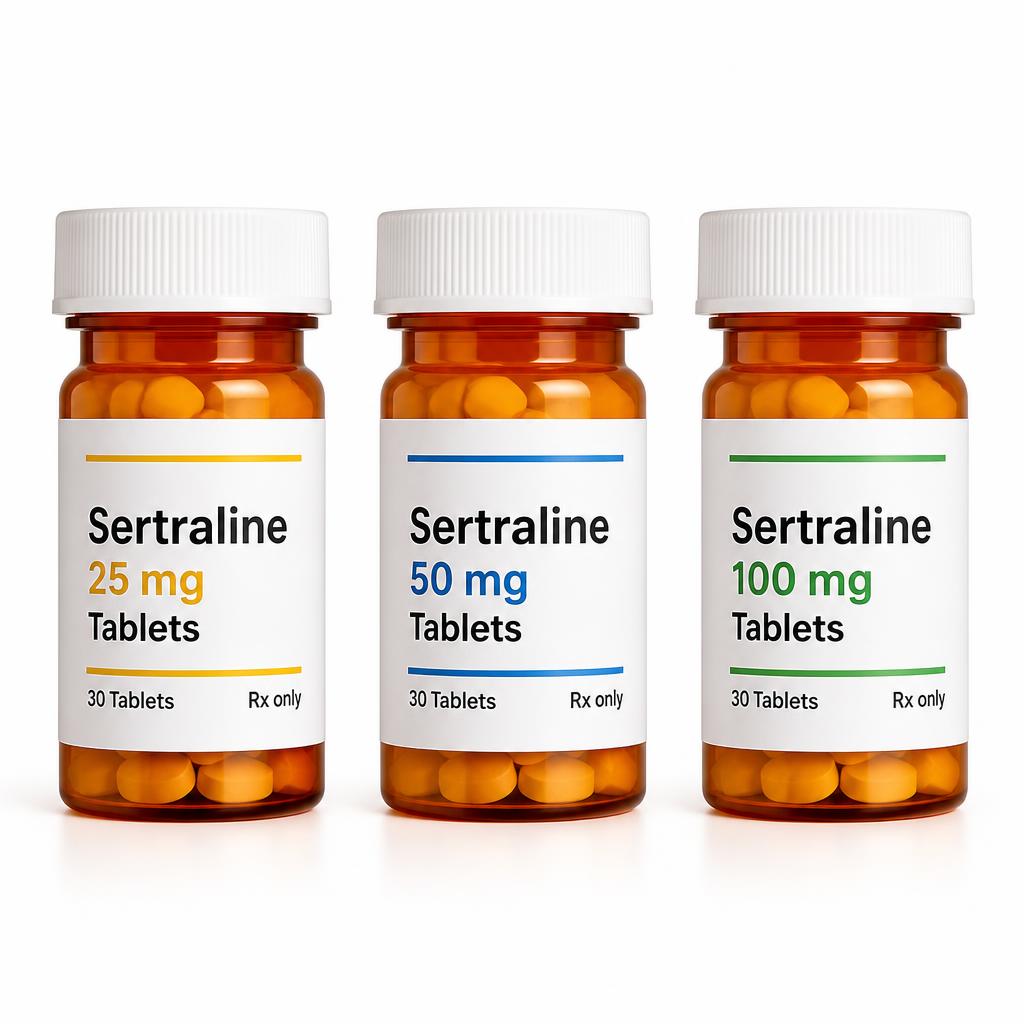
Zoloft contains sertraline, a selective serotonin reuptake inhibitor prescribed for depression, anxiety, OCD and PTSD. It requires 4 to 6 weeks of daily dosing before full antidepressant effects appear. A valid prescription is mandatory.
- Dose: 25mg to 200mg daily, adjusted in 25 to 50mg steps weekly
- Status: Prescription required, not a controlled substance
- Primary warning: Suicidal thoughts risk in ages 18 to 24 during first month
- Onset: 4 to 6 weeks for mood improvement; sleep and appetite improve sooner
MedVipp Rx does not sell medication. We publish facts for patients and caregivers.
What Is Zoloft
Zoloft contains sertraline, a selective serotonin reuptake inhibitor. The FDA approved it in 1991. It blocks the reuptake of serotonin into nerve cells. This increases serotonin levels in the brain. Higher serotonin improves mood, sleep and emotional stability.
The “selective” part of SSRI means sertraline targets serotonin reuptake fairly narrowly. It does not block other receptors the way older or more sedating antidepressants do. This is why Zoloft tends not to cause heavy sedation. It does one specific job rather than several at once.
Zoloft is FDA-approved for major depressive disorder, obsessive-compulsive disorder, panic disorder, post-traumatic stress disorder, social anxiety disorder and premenstrual dysphoric disorder. It is not a controlled substance. It does not cause physical dependence at therapeutic doses.
How Zoloft Works
Zoloft does not work overnight. It needs 4 to 6 weeks to rebuild serotonin pathways in the brain. This is called the therapeutic lag. Some patients feel worse during the first 2 weeks. Anxiety may spike. Nausea and jitteriness are common. This is normal. The brain is adjusting to higher serotonin levels. Do not stop Zoloft because of early discomfort.
Small improvements appear first. Sleep gets better. Appetite returns. Energy rises slightly. Mood lifts last. Many patients quit at week 3 because they feel no joy. This is a mistake. The emotional blunting fades after week 4 or 5. Tell your doctor if you feel no improvement after 6 weeks. The dose may need adjustment. You may need a different SSRI. Do not increase the dose on your own.
Conditions Treated by Zoloft
Doctors prescribe Zoloft for several psychiatric conditions. Patients researching treatment options often have one of the following diagnoses:
- Major depressive disorder: persistent sadness, loss of interest, fatigue and sleep disturbance
- Generalized anxiety disorder: excessive worry, restlessness, muscle tension and irritability
- Panic disorder: recurrent panic attacks with chest pain, palpitations and fear of dying
- Obsessive-compulsive disorder: intrusive thoughts and repetitive behaviors
- Post-traumatic stress disorder: flashbacks, nightmares and hypervigilance after trauma
- Social anxiety disorder: intense fear of social situations and scrutiny
- Premenstrual dysphoric disorder: severe mood swings, irritability and physical symptoms before menstruation
Zoloft Dosage and Strengths
Available Forms
Zoloft is manufactured in several forms. Your doctor will select the appropriate form based on your diagnosis, age and response.
- 25mg tablets: starting dose for panic disorder and elderly patients
- 50mg tablets: standard starting dose for depression and anxiety
- 100mg tablets: maintenance dose for moderate to severe conditions
- 150mg and 200mg tablets: maximum daily doses for OCD and treatment-resistant depression
- Liquid concentrate 20mg/mL: alternative for patients who cannot swallow tablets
Standard Adult Dosing
Dosing depends on the condition being treated. Your doctor selects the dose based on your diagnosis and response. Do not use these examples to self-medicate.
- Depression: 50mg daily starting dose. Typical range 50mg to 200mg daily.
- Generalized anxiety: 25mg to 50mg daily starting dose. Typical range 50mg to 200mg daily.
- Panic disorder: 25mg daily starting dose. Typical range 50mg to 200mg daily.
- OCD: 50mg daily starting dose. Typical range 50mg to 200mg daily.
- PTSD: 25mg to 50mg daily starting dose. Typical range 50mg to 200mg daily.
Your doctor may adjust based on age, weight and response. Never increase the dose on your own. If your liver does not process medications efficiently, your prescriber will likely start you at half the typical dose. Moderate-to-severe liver impairment generally rules sertraline out altogether.
The PMDD Exception
For every other approved use, Zoloft is a daily medication. PMDD is the outlier. Some patients take it only during the two weeks before their period — the luteal phase — stopping once menstruation begins, then starting again the next cycle. Others take it continuously, all month, every month. Both patterns are FDA-recognized. Which one makes sense depends on your specific symptom pattern. Discuss this directly with your prescriber.
Missed Dose Instructions
Take the missed dose when you remember unless the next dose is soon. Never double up. Doubling raises the risk of serotonin syndrome and nausea. If you miss multiple days, call your doctor. You may need to restart at a lower dose.
Tapering and Discontinuation
Stopping Zoloft suddenly causes discontinuation syndrome. This is not addiction. It is physical withdrawal from serotonin changes. Symptoms include dizziness, nausea, fatigue, irritability and insomnia. The hallmark symptom is brain zaps. Patients feel electric shock sensations in the head during eye movement. They are harmless but disturbing.
Brain zaps last 1 to 3 weeks after stopping. They fade as the brain readjusts. The risk is higher with short half-life SSRIs. Zoloft has a shorter half-life than Prozac. This makes withdrawal sharper. Your doctor will taper the dose slowly. A typical taper reduces by 25mg every 2 weeks. Some patients need slower reductions below 50mg. Do not stop Zoloft without medical supervision.
Side Effects
Common Side Effects
Most patients experience at least one mild side effect during treatment. These usually resolve after the first 2 to 4 weeks:
- Nausea and diarrhea. About 30 percent of patients. Usually fades after week 2.
- Headache. Mild and temporary.
- Dry mouth. Drink water frequently.
- Insomnia or drowsiness. Varies by person.
- Tremor. Shaking hands, usually mild.
- Sweating. Especially at night.
Sexual Side Effects
The side effect that does not get discussed enough upfront: sexual dysfunction. In clinical trials, 14 percent of men on Zoloft reported ejaculation problems, versus about 1 percent on placebo. Reduced libido and difficulty reaching orgasm show up frequently in both men and women. Unlike nausea or headache, this one tends to persist for as long as the medication is taken. It is a common reason people quietly stop treatment rather than bring it up. Tell your doctor if this occurs. Dose changes or drug switches may help.
Serious Side Effects
Call 911 or go to the ER if you have:
- Thoughts of suicide or self-harm
- Serotonin syndrome: agitation, confusion, rapid heartbeat, high fever, muscle rigidity
- Severe allergic reaction: swelling, hives, difficulty breathing
- Abnormal bleeding: nosebleeds, bloody stool, heavy bruising
- Manic episode: extreme energy, reckless behavior, no sleep for days
- Seizures
Who Should Not Take Zoloft
Zoloft is contraindicated in patients taking monoamine oxidase inhibitors. A 14-day washout is mandatory in either direction. Do not use Zoloft if you have taken an MAOI in the past 2 weeks.
Patients with a history of bipolar disorder or mania require caution. Zoloft can trigger manic episodes. Those with seizure disorders, bleeding disorders or severe liver disease need dose adjustment or alternative therapy. Patients under 25 need close monitoring for suicidal thoughts during the first 2 months.
Warnings and Precautions
Suicidal Thoughts and Behaviors
Zoloft carries an FDA boxed warning. It may increase suicidal thinking and behavior in patients under 25 during the first weeks of treatment. This risk peaks between days 7 and 21. Young patients may feel agitated. They may act impulsively.
Family members must watch for warning signs. These include talking about death, giving away possessions, sudden calmness after severe depression and increased risk-taking. Untreated depression carries a higher suicide risk than medication. The warning exists to ensure monitoring. It does not mean young patients should avoid treatment. It means they need closer supervision.
Serotonin Syndrome
Serotonin syndrome is a potentially life-threatening condition. It occurs when serotonin levels become too high. Symptoms include agitation, confusion, rapid heartbeat, high fever, muscle rigidity and diarrhea. Risk increases when Zoloft is combined with other serotonergic drugs.
Never combine Zoloft with MAOIs, other SSRIs, SNRIs, triptans, tramadol or St. John’s Wort. Seek emergency care immediately if symptoms develop.
False Positive Drug Screens
Sertraline has been documented to cause false positives on some urine screens for benzodiazepines. This is a known quirk of the medication. A confirmatory lab test can clear this up if it comes up in a screening. Inform the testing facility that you take sertraline before providing a sample.
Drug Interactions
Zoloft interacts with several medications. Always provide your doctor with a complete list of prescriptions, supplements and over-the-counter drugs.
- MAOIs: phenelzine, tranylcypromine. Never use within 14 days. Deadly serotonin syndrome risk.
- Other SSRIs or SNRIs: Prozac, Lexapro, Cymbalta, Effexor. Combined use raises serotonin too high.
- Tramadol: raises serotonin. Seizure risk increases.
- Warfarin: Zoloft may increase bleeding risk. Check INR.
- NSAIDs: ibuprofen, aspirin. Combined use raises stomach bleeding risk.
- St. John’s Wort: herbal supplement. Causes serotonin syndrome.
- Triptans: migraine drugs. Combined use causes serotonin syndrome.
- Pimozide: contraindicated due to dangerous heart rhythm changes.
Before starting, your prescriber should screen for any personal or family history of bipolar disorder. Antidepressants can occasionally unmask a manic episode in someone who has undiagnosed bipolar disorder.
Zoloft and Pregnancy
Zoloft crosses the placenta. Studies show low risk of birth defects at standard doses. But third-trimester use may cause newborn withdrawal. Symptoms include jitteriness, feeding problems and breathing difficulty.
Doctors weigh risks carefully. Untreated depression during pregnancy harms both mother and baby. Zoloft is often the safest antidepressant choice during pregnancy. But the dose should stay as low as possible. Small amounts pass into breast milk. Infant sedation is rare. Most doctors consider Zoloft safe while breastfeeding. Watch your baby for excessive sleepiness or poor feeding.
Overdose Information
Sertraline alone has not been linked to fatal overdose in available data. But taken with other substances, an overdose can bring on serotonin syndrome, seizures, irregular heartbeat or reduced consciousness. There is no specific antidote.
Chronic overdose from excessive dosing causes persistent sexual dysfunction, weight gain, emotional blunting and low sodium. Treatment involves stopping the drug, IV fluids and monitoring. Hospitalization is often required. Call Poison Control at 1-800-222-1222 for any suspected overdose.
Zoloft vs Prozac
Zoloft, Prozac and Lexapro are all SSRIs. They work similarly. Doctors choose based on side effect profiles and patient history.
Prozac has a long half-life. It stays in the body for weeks. Missed doses are less problematic. But it causes more insomnia and anxiety. It is activating. Doctors prefer Prozac for lethargic depression.
Lexapro is the most selective SSRI. It targets serotonin with minimal effect on other receptors. This means fewer side effects. But it costs more. Some insurance plans require trying generic sertraline first.
Zoloft sits in the middle. It is energizing enough for depression. It is calming enough for anxiety. It has fewer drug interactions than Prozac. This balance makes it the most prescribed SSRI in the United States.
Zoloft for Pets
Veterinarians sometimes prescribe sertraline off-label for dogs. It treats separation anxiety, aggression and obsessive-compulsive behaviors like tail chasing. Canine dosing differs from human dosing. It is calculated by body weight. Typical dose is 1 to 4mg per kilogram daily.
Pet owners should never give human Zoloft to animals without veterinary guidance. Human tablets contain binders that may harm animals. Incorrect dosing causes excessive sedation, vomiting and agitation in dogs. Veterinary compounding pharmacies prepare canine-specific doses under veterinary order.
Storage and Handling
Store Zoloft at room temperature between 20C and 25C. Keep the container tightly closed and away from moisture, heat and direct light. Do not store in the bathroom. Keep out of reach of children and pets.
Liquid concentrate must be diluted before each dose. Use the provided dropper. Mix with water, ginger ale or orange juice. Do not mix with cola. The concentrate contains alcohol. Keep it away from heat and open flames. Dispose of unused medication through pharmacy take-back programs. Do not flush down the toilet unless instructed.
Frequently Asked Questions
Is Zoloft available over the counter?
No. Zoloft requires a prescription in the United States and most other countries. Sources selling it without a prescription operate illegally. There is no way to verify what is actually in the product.
How long before Zoloft works?
Zoloft needs 4 to 6 weeks of consistent daily dosing to show full antidepressant effects. Sleep and appetite may improve within 1 to 2 weeks. Anxiety relief often appears before mood lifts. Do not stop early if you feel no change at week 2.
Can Zoloft cause sexual problems?
Yes. Clinical trials show ejaculation issues in 14 percent of men, versus 1 percent on placebo. Reduced libido and difficulty reaching orgasm show up frequently in both men and women. This tends to persist for as long as you take the medication. Tell your doctor rather than quietly stopping. Dose changes or drug switches may help.
Why does Zoloft have an FDA boxed warning for young adults?
The FDA requires a boxed warning for patients under 25. Zoloft may increase suicidal thoughts and behavior during the first weeks of treatment. This risk is highest in teenagers and young adults. Close monitoring is mandatory during the first 2 months. Untreated depression carries a higher suicide risk than medication.
Can I stop Zoloft suddenly?
No. Stopping Zoloft suddenly causes discontinuation syndrome. Symptoms include dizziness, nausea, insomnia, irritability and electric shock sensations in the head called brain zaps. Your doctor will taper the dose over 2 to 4 weeks. Do not stop on your own.
Does Zoloft cause weight gain?
Weight gain affects about 25 percent of long-term Zoloft users. Zoloft may increase appetite or slow metabolism. Some patients lose weight initially due to nausea. Monitor your weight monthly. Diet and exercise help control gain.
Can Zoloft cause a false positive on a drug test?
Yes. Sertraline has been documented to cause false positives on some urine screens for benzodiazepines. A confirmatory lab test can clear this up if it comes up in a screening. Inform the testing facility that you take sertraline before providing a sample.
What is the difference between Zoloft and Lexapro?
Zoloft and Lexapro are both SSRIs. Lexapro is more selective for serotonin receptors. This means fewer side effects. But Lexapro costs more. Zoloft is cheaper and covers more conditions including OCD and PTSD. Both require prescriptions.
Is Zoloft approved for children?
Specifically for OCD, in children 6 and older. It is not FDA-approved for depression in children, though a doctor may still consider it off-label in certain circumstances. Patients under 25 need close monitoring for suicidal thoughts during the first 2 months.
Can Zoloft be used for dogs or cats?
Yes, under veterinary supervision. Zoloft treats separation anxiety, aggression and obsessive behaviors in dogs. Dosing is calculated by body weight. Human tablets contain binders that may harm animals. Never give Zoloft to pets without veterinary guidance.
Questions about your Zoloft prescription? Email us at [email protected]. We read every message. Response time is typically one business day. We do not provide medical advice by email. For emergencies, call 911.
Editorial Standards: Our team reviews medical literature and FDA labeling to produce accurate patient guides. We do not sell medication. Content is written and fact-checked by the MedVipp Rx Editorial Team. Last updated on August 12, 2026. We regularly update this page to reflect the latest FDA guidelines and clinical research on SSRI safety.
Important Medical Disclaimer
This guide provides educational content only. It does not replace medical advice. Talk to your doctor before starting, stopping or changing Zoloft. Do not use this site to diagnose or treat any condition. Zoloft may increase suicidal thinking in young adults ages 18 through 24. Monitor mood closely during the first month.
Emergency Notice: If you or someone taking Zoloft experiences thoughts of self-harm, signs of serotonin syndrome (agitation, fever, rapid heartbeat, muscle rigidity), or a severe allergic reaction, seek emergency care immediately. Call 911, or contact the 988 Suicide and Crisis Lifeline for mental health support.
Sources and References
- U.S. Food and Drug Administration – Zoloft (Sertraline) Prescribing Information
- DailyMed – Sertraline Hydrochloride Drug Label, National Library of Medicine
- PubMed – Sertraline – StatPearls, NCBI Bookshelf
- NIH – Sertraline Oral Tablet, MedlinePlus
- FDA Boxed Warning – Suicidality in Children, Adolescents, and Young Adults